
DNSI Monitoring
Dead Neck Sampson's Island
Barnstable Clean Water Coalition and the community have done a great job in their efforts to protect the threatened and endangered birds that nest on Dead Neck Sampson’s Island (DNSI). During the summer months it is important not to disturb the nesting sites. Please be respectful of the rules and fencing. During this time it is important to remember not to bring your dog to the island, as they are not allowed since they can disturb or injure the birds. If everyone can follow the rules and keep away from certain areas we can continue to keep the island open to visitors.
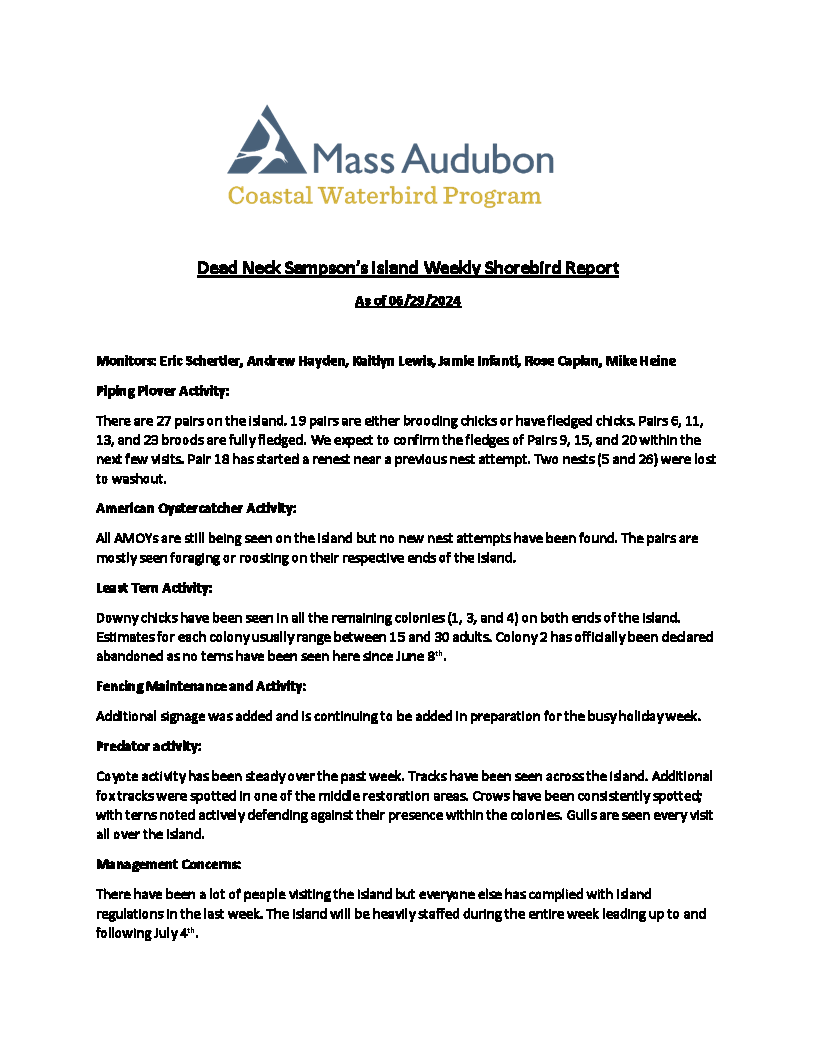
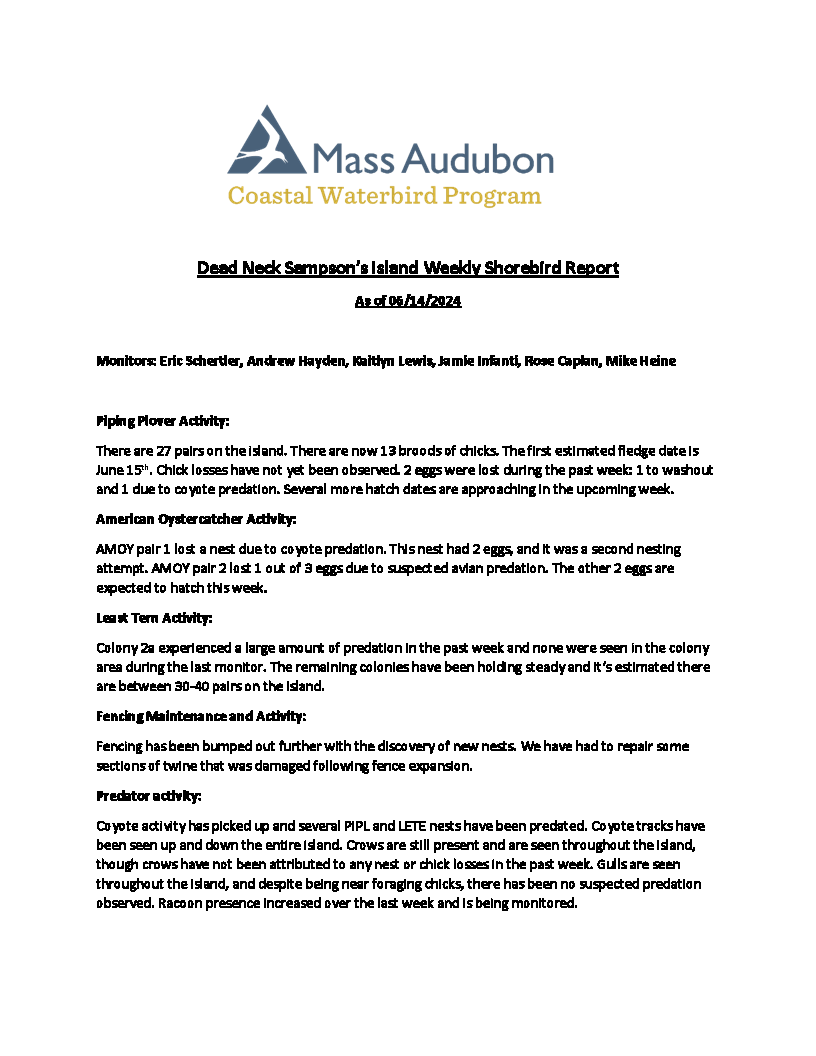
Dead Neck Sampson's Island Report
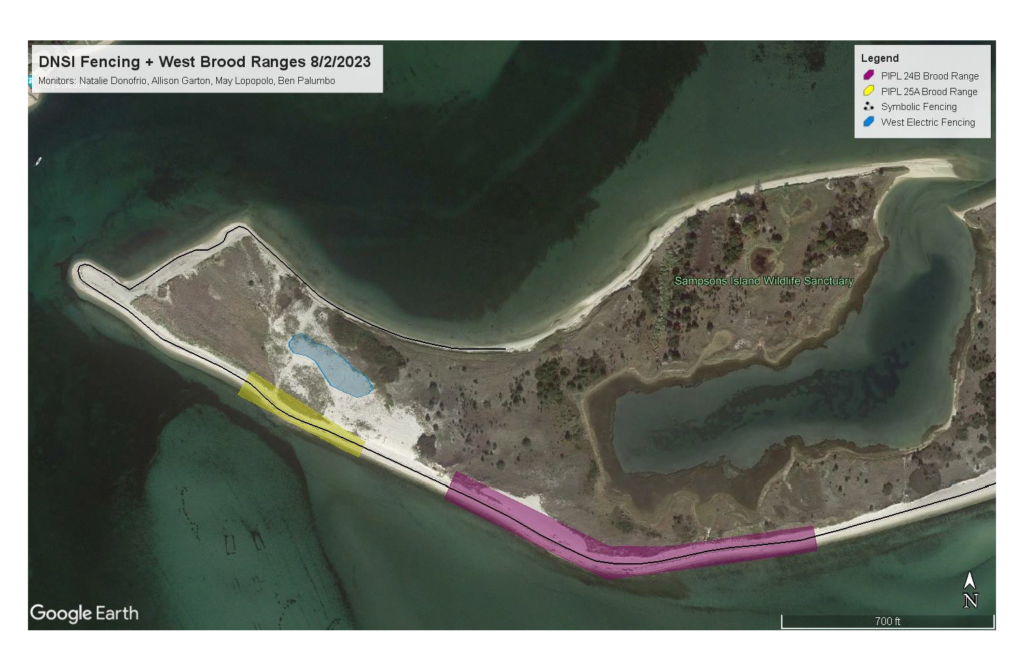
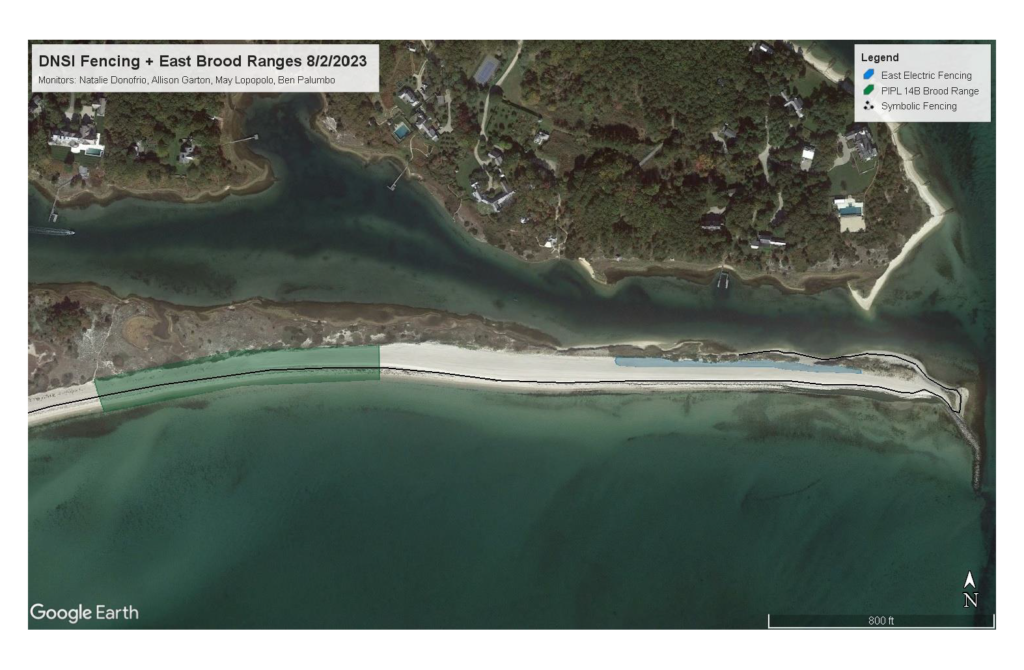
Maps
6/29/2024
6/14/2024
6/6/2024
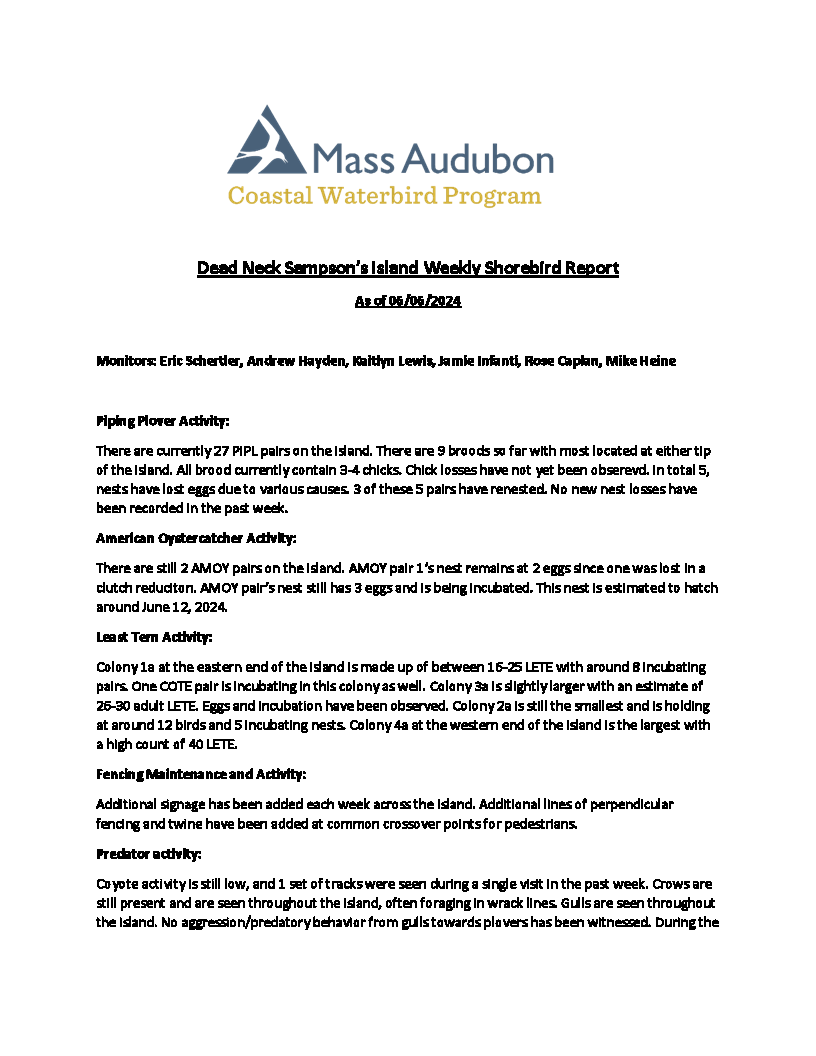
6/1/2024
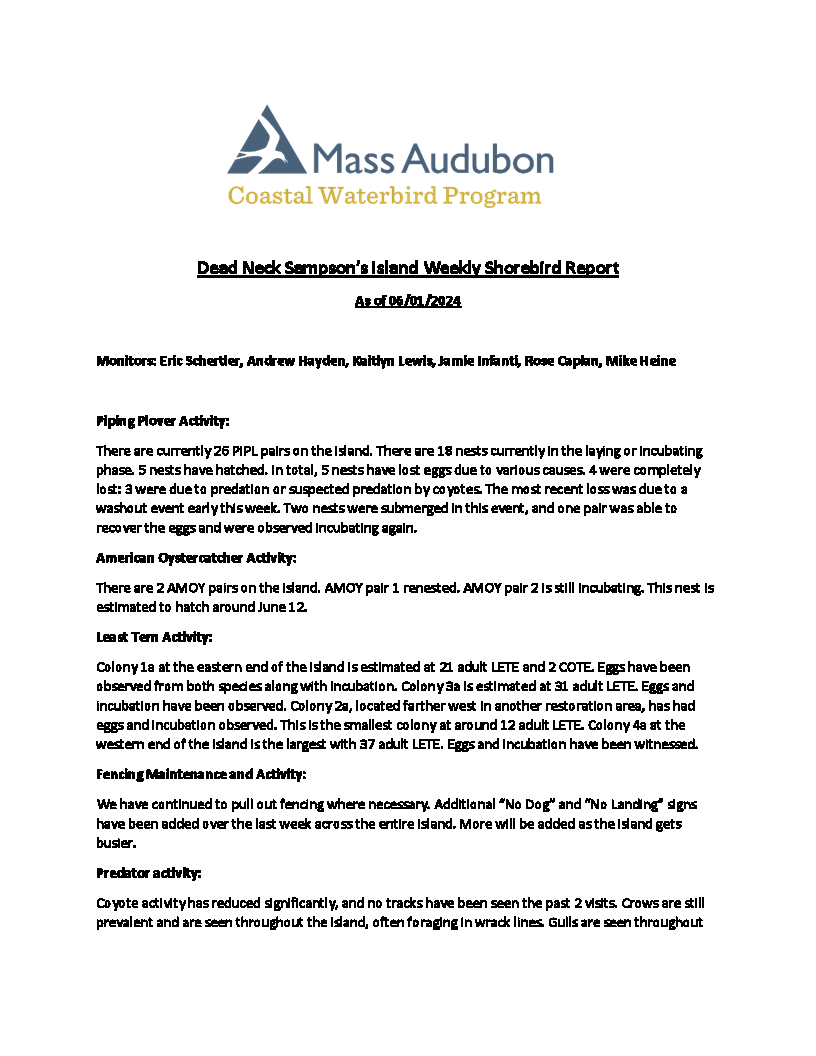
5/26/2024
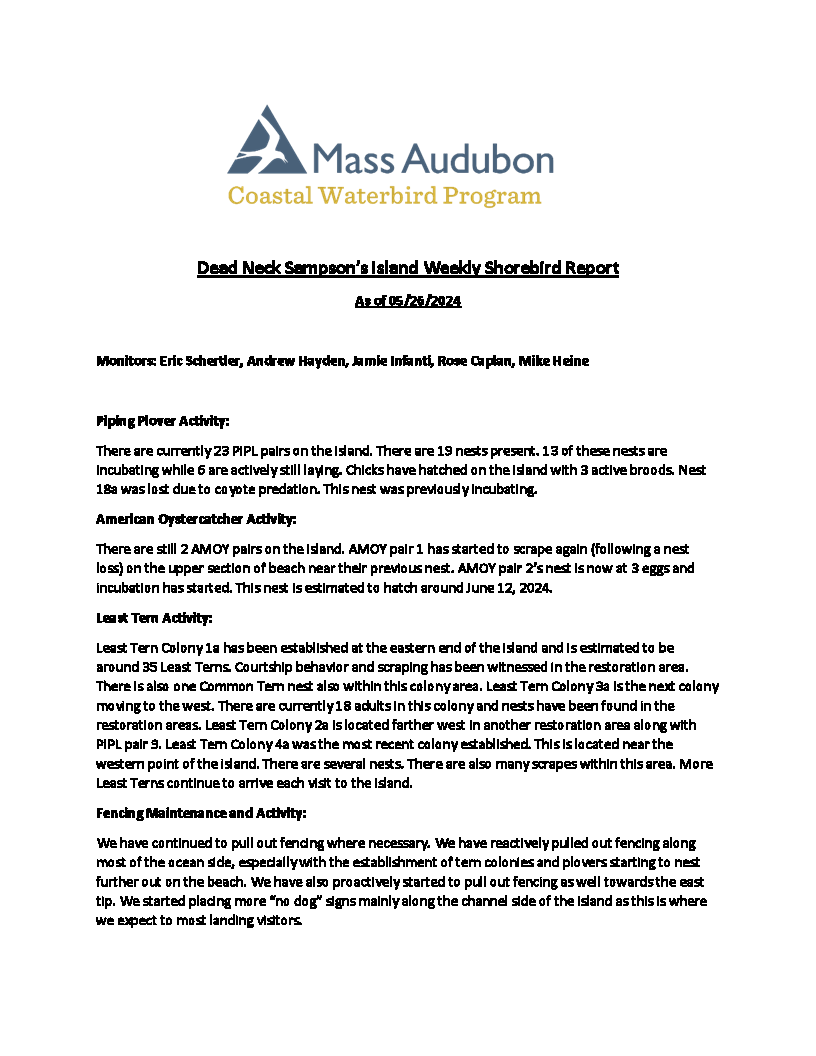
5/8/2024
About Dead Neck Sampson's Island
Management of DNSI
We may be the Barnstable Clean Water Coalition now, but up until spring 2017, this organization was known as Three Bays Preservation, Inc. with a mission to preserve, maintain and protect the 12,541-acre watershed that encompasses North, West and Cotuit Bays. Here is how Three Bays Preservation came to be.
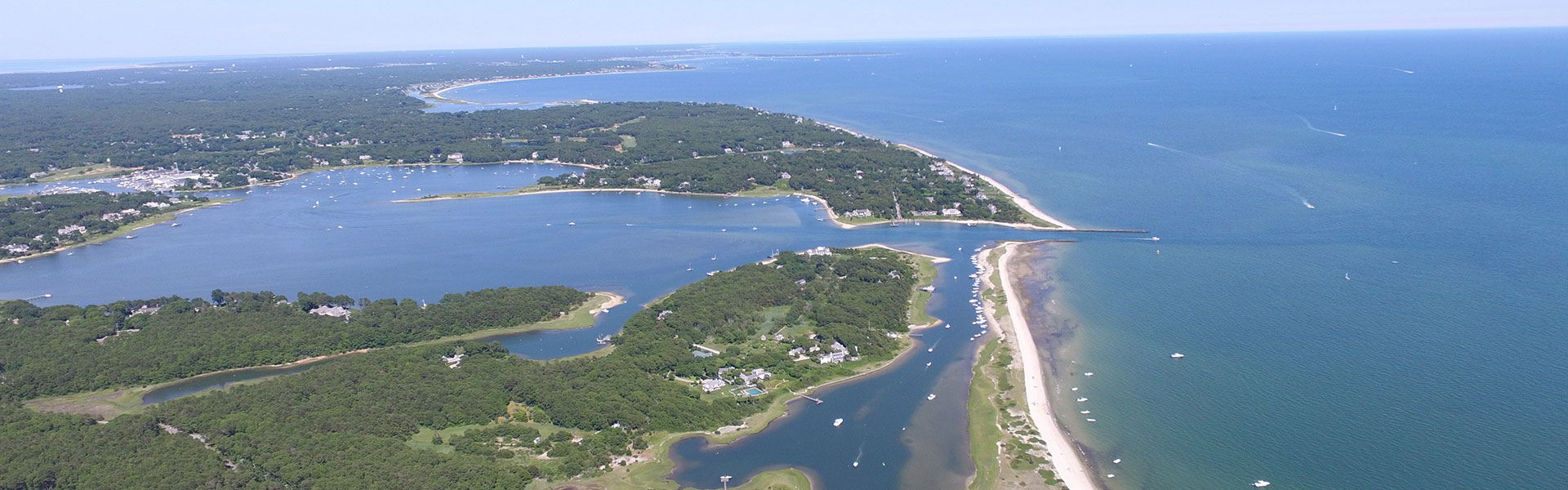
In the mid 1990’s, residents came together to preserve Dead Neck Island, a barrier island located south of Oyster Harbors. Paul Mellon, the original owner of the island, had passed away and a long-range plan for Dead Neck was needed. Several of these residents banded together in 1998 to form Three Bays Preservation and develop an ambitious project that combined dredging area channels and using the dredge spoils to help rebuild and maintain the island. Almost 300,000 cubic yards of sand have been deposited on the island over the past 15 years. Not only has this sand been useful for beach nourishment, it also has been used to create critical nesting habitat for endangered coastal shorebirds, including Least Terns, Common Terns and Piping Plovers.
Maintaining the integrity of the island has been a constant, ongoing process. Due to our active role in helping to preserve Dead Neck Island, Three Bays Preservation was honored to have Dead Neck Island donated to us in 2004 by Rachel Mellon, Paul Mellon’s widow. BCWC continues to maintain the island and manage it as a nature sanctuary per the request of the Mellon family.
Over the years, erosion and longshore drift has caused Dead Neck Island to merge with adjacent Sampson’s Island forming the barrier beach system now known as Dead Neck Sampson’s Island (DNSI). BCWC works closely with Massachusetts Audubon’s Coastal Waterbird Program staff to monitor and ensure protection for the nesting shorebirds on DNSI, which is designated an Important Bird Area. Everyone is welcome to visit this nature sanctuary, but we do ask that you follow these simple rules to assure the safety of the nesting birds and their chicks:
- Access to parts of the island are limited in spring and summer to protect nesting birds.
- Please stay out of nesting areas that are defined by symbolic fencing.
Please stay off the dunes and do not disturb island vegetation. Many island plants have deep roots that stabilize the sand and prevent erosion. - Pets are not allowed on the island. Please leave your dogs on the boat or at home.
- Kite flying is prohibited on DNSI. Kites resemble hawks and will alarm nesting birds.
- Lifeguards are not present on DNSI and swimming is at your own risk.
- Open fires are not permitted. If you use a grill, please take the charcoal with you and do not bury it in the sand.
- If you pack it in, please pack it out.
Ecology of DNSI
Barnstable Clean Water Coalition (BCWC) monitors wildlife and human activity on Dead Neck Sampson’s Island (DNSI), along with staff from the Coastal Waterbird Program of the Massachusetts Audubon Society (Mass Audubon). These efforts are especially important during the warmer months when the island receives an influx of visitors, where at the same time, locally-threatened Piping Plovers (Charadrius melodus) and Least Terns (Sternula antillarum) are actively nesting. These shallow nests, called scrapings, are extremely fragile and susceptible to frequent predation by other birds, foxes, and coyotes. The scrapings are typically found along the ocean-side of DNSI and are the reason for its seasonal closure. It is important not to disturb the nests and for visitors to stay away from active nesting sites marked with fencing by Mass Audubon. Additionally, to minimize disturbance to nesting sites and birds, dogs are not allowed on the island.
The 2018 season was disappointing for the Piping Plover and Least Tern populations that nest on DNSI. Between predators like American Crows and extreme high tides, the eight Piping Plover pairs observed on the island had a hard time building scrapings and producing a clutch of eggs. Only one plover chick survived to fully fledge. The Least Terns didn’t yield any nests, due to the high tides washing the scrapings away. We are hoping for a more successful summer next year, especially with the dredge spoils and enhanced nesting environment that will help create a more suitable nesting habitat for these shorebirds.
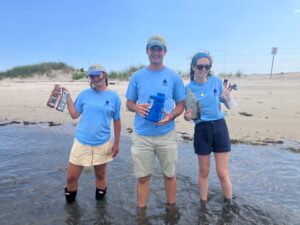
While out on the island, BCWC staff walk the shoreline and pick up litter and debris on the beach that is left by people, washed ashore by waves or carried there by wind. It is crucial to remove this litter as many species of wildlife can mistake certain pieces of trash, especially plastics, as a food source. Over time, plastic will photodegrade (decompose from exposure to light), which means sunlight will gradually break plastic down into tiny and in some cases microscopic pieces. Animals ingest or become entangled in plastic debris resulting in the deaths of many species of wildlife, including seabirds, sea turtles, whales, dolphins and fish.


